

The Great Industrial War
The One With The Economist | Dad Meltdown | INVADER News

The Tech Supremacy:
Manufacturing vs Innovation?
On the way home from France, I bought one of The Economist’s summer issues from the airport. And my dad didn’t even flinch before calling me a “woke fascist” right then and there! But there were a few things in there which actually got me thinking that…
Everything feels a little too convenient for everyone but the U.S…
I actually began reading from the very start of the magazine. With the first article delving deep into the Russian ties with the Chinese military and their joint operations supposedly taking place.
Apparently China is receiving help in building “stealthier” nuclear submarines while Russia is being supplied with equipment and drones in return.
Probably just speculation, I don’t think anyone really knows what’s going on with Russia at all. But the big takeaway from this story is that today’s wars are increasingly being fought with drones.
The New Art of War?
So this probably doesn’t come as a surprise to anyone. We might be entering complete drone warfare.
Well not yet. But if we’re no longer fighting primarily with boots on the ground… It means fewer soldiers might have to risk their lives in combat. Which may even make wars less stigmatized by those waging it.
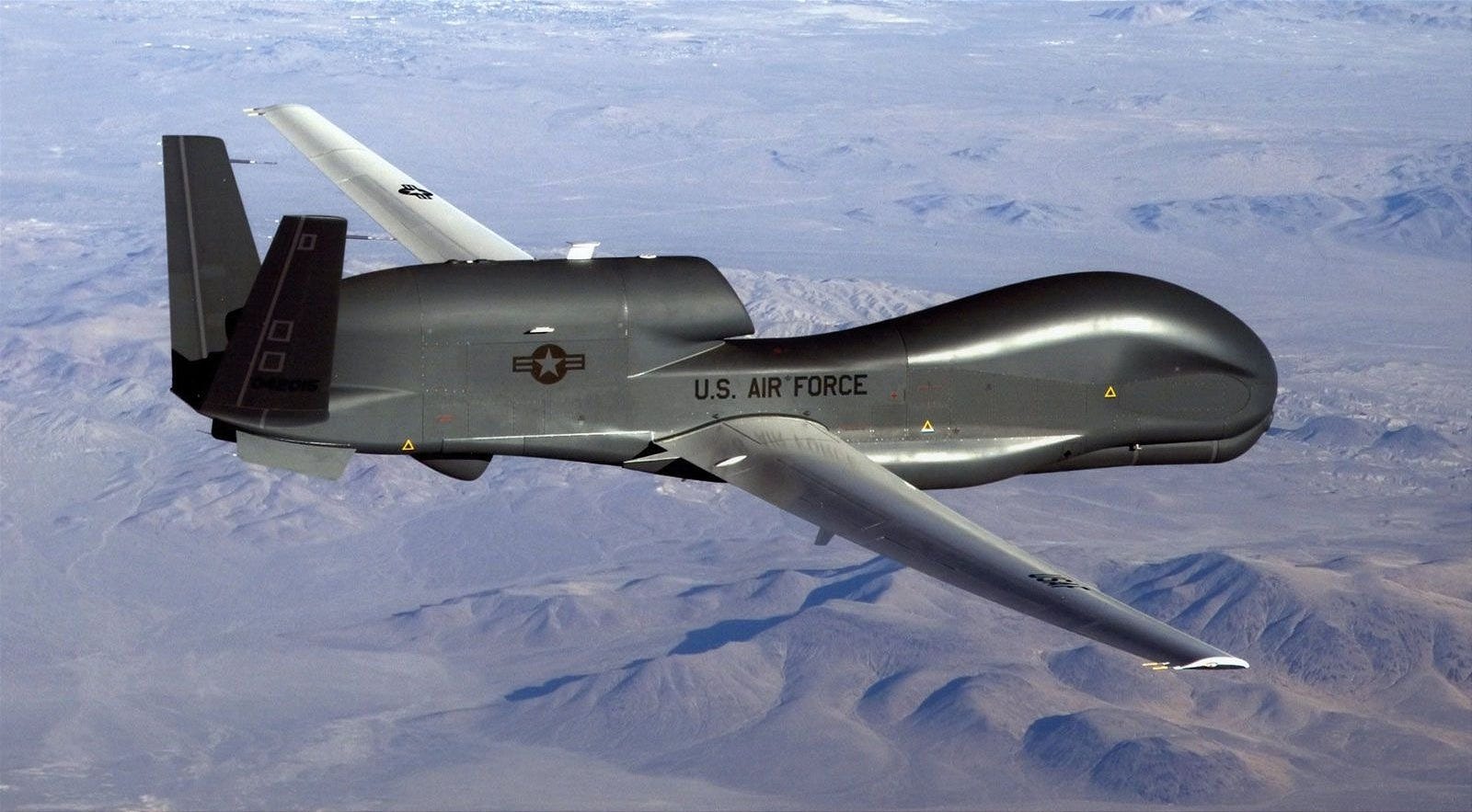
It could even become an arena for superpowers to see who has the greatest military and technology. Okay extremely unlikely… 🧐
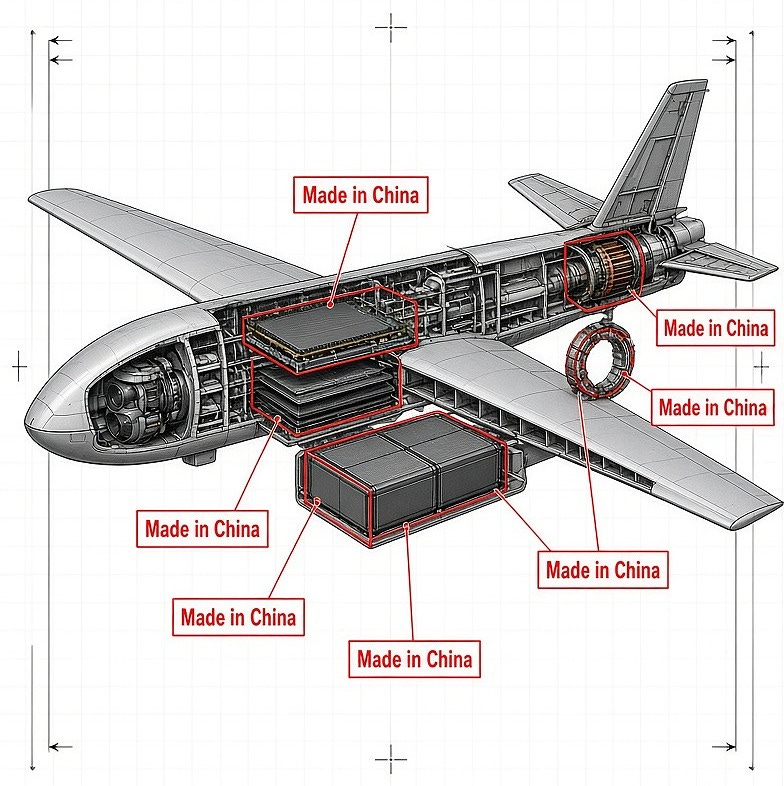
The really concerning part of the article though, was how ugly the drone market is about to become. China is the largest drone manufacturer of any kind by far, and are now aggressively pursuing ones for military purposes.
And that’s not all, they’re also supplying most of the components that make up all of the drones worldwide. After all, it’s China we’re talking about. So naturally, this puts immense pressure on the west…
The Tear of the Iran War?
We’re all aware that military power in some sense equals economic power. Whoever has the means to do something which others cannot have an unrivaled position of power.

And that’s pretty much been the case for the United States all of these years. The apex of both technological development and overall warfare. Fact of the matter is:
You don’t mess with the U.S!
And you probably still don’t want to do that! However based on the 2nd article I read, the Iran war was described as a “slow erosion” of America’s powerful position.
Bleeding them dry of both resources and precious tax dollars! Ultimately becoming vulnerable long-term, whether it’s against China and the inevitable invasion of Taiwan or something else.
The Economist’s Predicament
Anyway, I think the ”Economists” here are seriously underestimating the United States military capability. My dad says the U.S Navy and Air force alone could take on every country on Earth simultaneously!
But their overarching point here is that the U.S navy is already stretched between the Middle East, Europe, Japan and now potentially Cuba as well. And that it would continuously exhaust their economic resources.
As keeping everything in check between Iran, Cuba, North Korea and China is simply too expensive. Arguing that it’s what the 44% increase in next year’s defense budget is for, which also hasn’t been approved yet…
While the Iran war isn’t a “direct war”, it doesn’t appear to be ending anytime soon and together with everything else? Eventually the U.S army is going to be “overexploited”.
The Industrial Asymmetry?
It’s logical, however I think it’s a bit of a stretch. But playing along then with the ‘U.S essentially being torn’, if another war were to break out, then what?
It wouldn’t matter who had the best weapon anymore. It would be the one that could actually stand to wage war the longest. And China basically has:
Enormous manufacturing capability → Arms-race capability
Civilian drone fleet → Military drone fleet
Every component, battery, motors, electronics and vehicle
What can’t be made on top of that?
I’m guessing the U.S has a reliable source and cache of oil. Something which China might not have. It may even the scale for now… But what happens when the first 10,000 U.S drones are gone? (At least the U.S has 10,000 drones…)
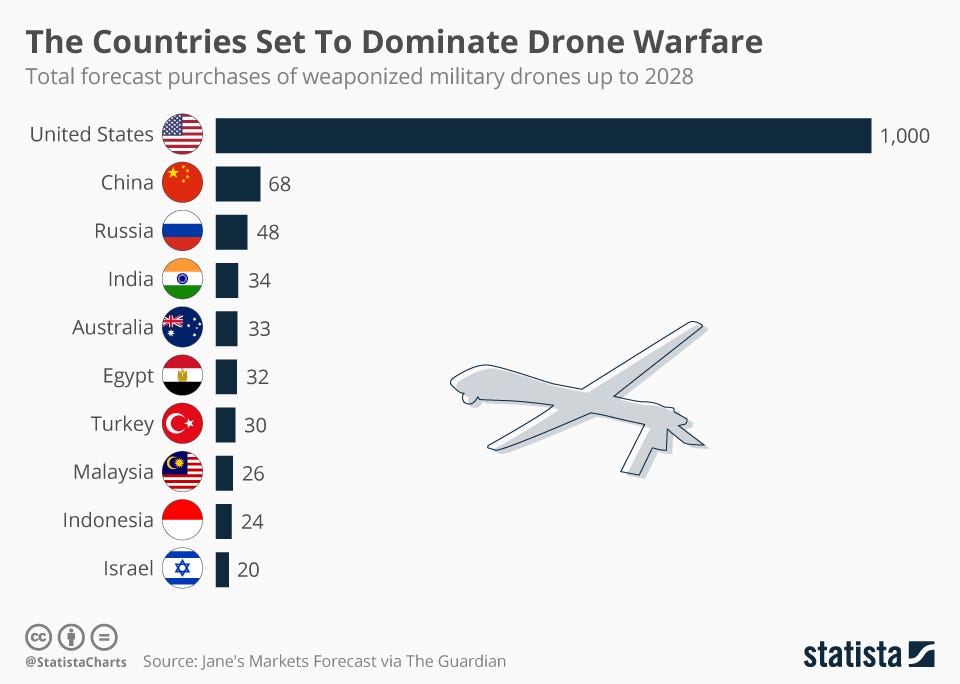
But who’s going to make the next 10,000?
U.S Supply Chain Sovereignty?
I think a scenario where the U.S, and the West in general, actually becomes self-sufficient across the board is very unlikely.
China produces damn near everything:
70% of all raw Silicon (most people know this)
65-80% of all Rare Earth Elements (most know this as well)
95% of all Gallium, needed for microchips (people forget)
80% of Graphite, important for batteries (few know this)
And this is just icing on the cake. So realistically, if the U.S were without China, they would have to build a strategic reserve and ration carefully. Which brings me to the final story I read from this magazine, being the interview with Elon Musk.
Apart from Elon just being Elon, he actually acknowledged this, stating that China will most likely get ahead of the U.S despite the lack of EUV lithography. Even saying that it was only a matter of time before they achieve EUV as well.
Which actually surprised me a bit.
The White Knight of the West?
Because if the bottleneck isn’t about the most advanced technology anymore and just industrial scale then the entire hegemony of the West starts falling apart. We still have the best platforms, best pilots (until AI pilots arrive) and technology for now...
But unless we can afford to maintain it, let alone improve it, It’s really difficult to see Western dominance prevailing indefinitely.
Since I was reading rather than actually listening to this interview, I can't say for sure, but it almost felt like he leveraged the familiar trope used to justify endless AI spending: Superintelligence will eventually save us.
Conveniently, the U.S is currently in the lead when it comes to AI.
Which also explains the strange economics behind Elon Musk. Because it’s almost as if a lot of the future technological supremacy of the U.S, at least in part, hinges on SpaceX and the Terafab potentially delivering on that promise.
My Move?
I still think the U.S military and FDPR will keep China and their other adversaries at bay for some time. This status quo seems too hard to break. Which is why I’m thinking that Moore’s law and human ingenuity will continue as well.
ASML: Needs no introduction. Buying the top? Yeah, probably not a bad move long-term. Huawei themselves have said that they may reach EUV lithography by 2032 at the earliest. Geometrical scaling dominance remains within the West.
Break the Supply Chain: This isn’t just about the chips, but the everything. I think the geeks from our past were right. Capitalism always results in a resource war, at least before the age of abundance. I’m calling MP Materials. Feels obvious.
INTC: I talked about this last year when it was in the $20s, never bought unfortunately. With the Terafab the narrative has definitely gotten a lot more interesting. But since there’s no equity stake or long-term plan for Intel within Terafab, I remain unsure over the long-term.
TSLA: I’m not recommending Tesla, and none of this is financial advice, but they’re also becoming a Fab. Which I find a bit interesting… If achieved, Tesla would have unmatched vertical integration.
Oil?: To my surprise there wasn’t much about oil or its future price trajectory in the print. Oil is much more than just gas and jet fuel. It’s in plastic, clothing, medicine, food, energy, heating, lubricants and even cooking.
The way I see it? The West must either maintain technological supremacy or become at least a little more self-sufficient…
WHICH IS MORE LIKELY?
🛰 Signal LOST: End of transmission — INVADER out… 🧭
Disclaimer: This post is for informational and entertainment purposes only. It reflects personal opinions and is not intended as financial advice. Always do your own research before making investment decisions.